What accessibility looks like when conditions get hard
TL;DR
After a winter storm in Boston, walking the city revealed how quickly accessibility can break down when conditions change. A conversation with the Massachusetts Commission for the Blind highlighted why consistent access matters most when cities are under pressure.
What we observed on the ground
After a major snowstorm, cities reveal more than their snow removal plans. They reveal their priorities.
During our time in Boston, we spent days walking downtown streets after the storm. Sidewalks were partially cleared. Intersections varied block by block. Some routes worked until they suddenly did not.
For blind and low vision travelers, these moments are not minor inconveniences. They are barriers that interrupt independence, safety, and confidence.
Snow piles narrowed pathways. Curb ramps disappeared beneath ice. Audible signals were harder to locate when paths shifted unexpectedly. Navigation became unpredictable.
Learning from lived experience
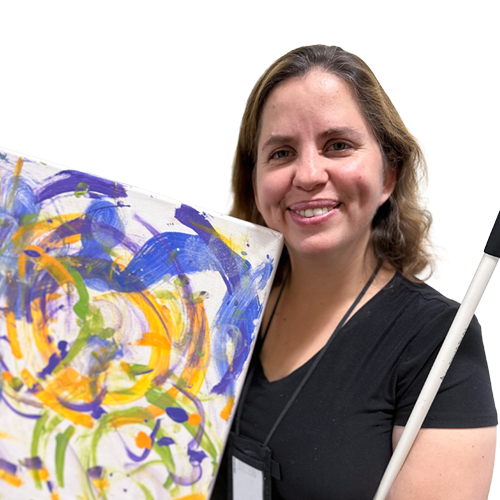
To better understand how these conditions affect daily mobility, we sat down with Kara Peters, an Orientation and Mobility Specialist with the Massachusetts Commission for the Blind.
Kara works directly with individuals navigating Boston every day and sees how access changes when environments become inconsistent. Her perspective reinforced what we witnessed firsthand. When accessibility is treated as optional, independence becomes fragile.
One statement from our conversation stayed with us.
Access is not extra.
Why minimum compliance is not enough
Accessibility is often framed as something added after the fact. During a storm, that mindset fails quickly.
A sidewalk that is partially cleared is still inaccessible. A crosswalk that works on one side but not the other leaves someone stranded halfway through a route. Meeting the minimum requirement does not always meet real needs.
True accessibility depends on consistency. Safety depends on predictability.
When cities plan for access only in ideal conditions, they fail the moment conditions change.
When design works against navigation
Boston is filled with open plazas, modern transit areas, and visually striking public spaces. While these designs may look clean and open, they can create challenges for blind and low vision travelers.
Large open areas without tactile cues, contrast, or structured wayfinding remove critical orientation information. Without those signals, navigation turns into guesswork.
Good design is not defined by appearance alone. It is defined by whether people can move through a space independently and safely.
Listening is how cities improve
What stood out most in our conversation with Kara was the importance of listening.
Real progress does not come from assumptions or checklists. It comes from engaging directly with people who navigate these environments every day and with professionals who support them.
The Massachusetts Commission for the Blind plays a vital role by advocating for safer spaces, supporting individuals, and helping cities understand where gaps exist.
Accessibility improves when feedback is heard early, consistently, and with respect.
Moving forward
Storms stress test cities. They reveal where systems hold and where they fail.
Boston has strong resources and committed professionals working toward better access. Like every city, there is room to grow. Conversations like this are where that growth begins.
We are grateful to the Massachusetts Commission for the Blind for their openness, expertise, and willingness to share their perspective.
To learn more about their work, visit
https://www.mass.gov/orgs/massachusetts-commission-for-the-blind
What comes next
Conversations like this are where better access begins. When cities, institutions, and communities listen to lived experience, accessibility becomes stronger, safer, and more consistent.
Partner with Hearsee: Explore navigation pilots and institutional partnerships
Share your story: Help shape the future of accessibility through lived experience
Support our mission: Invest in technology that respects trust and dignity
Follow Hearsee Mobility on social media for updates, stories from the community, and real-world accessibility progress.
👉 Ready to move? Contact Us